The Future of Education — How AI Is Transforming Learning (2025 Edition) 🎓🤖
🌍 Introduction
Education is undergoing the biggest transformation in history — and the driving force is Artificial Intelligence (AI).
In 2025, AI is not replacing teachers; it’s empowering them. From personalized learning paths to AI tutors that adapt to each student’s pace, technology is making education smarter, faster, and more inclusive.
Let’s explore how AI is reshaping classrooms, universities, and online learning worldwide. 🚀
🧠 1. Personalized Learning for Every Student
AI tools can now analyze how students learn — tracking speed, comprehension, and interests — to create custom learning experiences.
Platforms like Khanmigo (by Khan Academy) and Duolingo Max tailor lessons to each student’s level.
💡 Result: No more one-size-fits-all classrooms — every student learns at their own pace.
🧑🏫 2. Smarter Teaching Assistants
AI chatbots and virtual assistants help teachers save time by grading tests, preparing lessons, and answering student queries.
Systems such as Google Gemini Education and Microsoft Copilot for Schools are already supporting educators globally.
⚙️ Impact: Teachers can focus on mentoring instead of repetitive tasks.
📚 3. AI Tutors and Homework Helpers
Students now have access to 24/7 virtual tutors that explain complex topics in simple language.
Apps like ChatGPT, Quizlet AI, and Socratic by Google guide learners through math problems, essays, and exam prep.
🎯 Benefit: Learning continues anytime, anywhere — even without a classroom.
🌐 4. Online Courses Powered by AI
Modern e-learning platforms use AI to improve course quality and engagement.
Sites like Coursera, edX, and Udemy AI Coach provide real-time feedback and adjust course recommendations based on your goals.
📈 Result: Students complete courses faster and retain knowledge longer.
🎨 5. Creative Learning with AI Tools
From Canva Magic Studio to RexoCore AI, students can now design projects, write essays, and create presentations using AI.
This turns learning into a hands-on, creative process rather than passive reading.
✨ Example: A history student can use AI to build interactive timelines or infographics in minutes.
🧩 6. Smarter Assessments and Instant Feedback
AI can instantly analyze test answers, essays, and even spoken responses to give immediate, personalized feedback.
This helps both students and teachers understand where improvement is needed.
🔍 Advantage: Faster grading, deeper insights, and fairer evaluation.
🌎 7. Making Education Global and Accessible
AI translation and speech-to-text tools are breaking language barriers.
Students in remote areas can now access the same quality education as those in top universities.
🌐 Impact: Learning is becoming truly global, bridging cultural and linguistic gaps.
🔮 The Future Ahead
The next phase of education is AI-driven lifelong learning — where individuals continue upgrading skills throughout their careers.
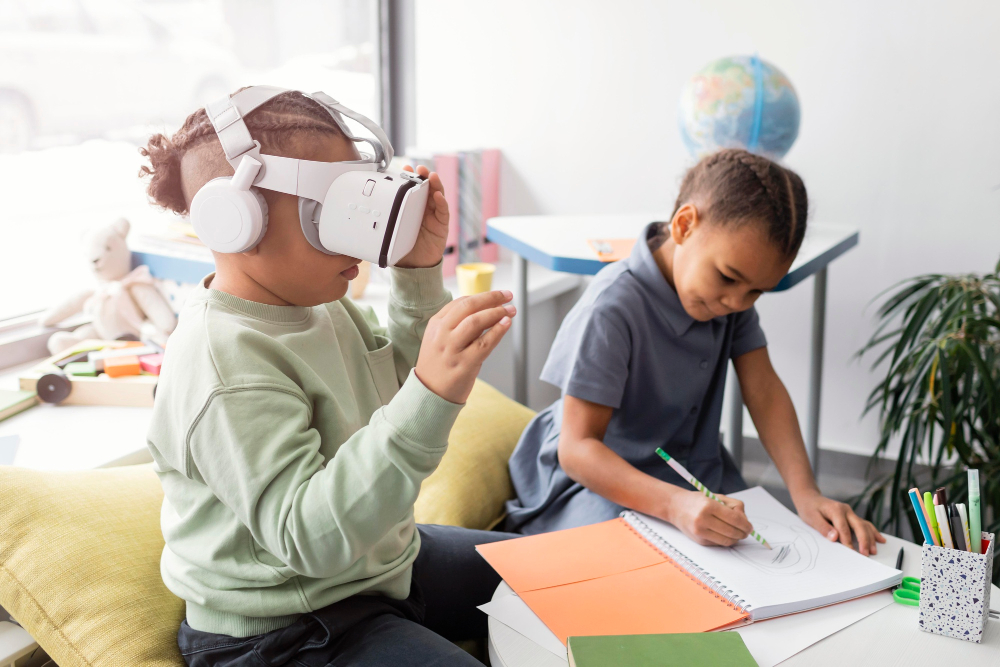
Hybrid classrooms, AI mentors, and immersive VR learning will make studying more interactive and personalized than ever.
🚀 Vision: By 2030, every learner could have an AI-powered personal tutor guiding them from school to professional life.
🧭 Conclusion
AI isn’t replacing teachers — it’s revolutionizing the way we learn and teach.
From classrooms to corporate training, Artificial Intelligence is making education more inclusive, efficient, and creative.
👉 The future of education is not just digital — it’s intelligent. Those who embrace AI in learning today will shape the smarter world of tomorrow. 🎓✨