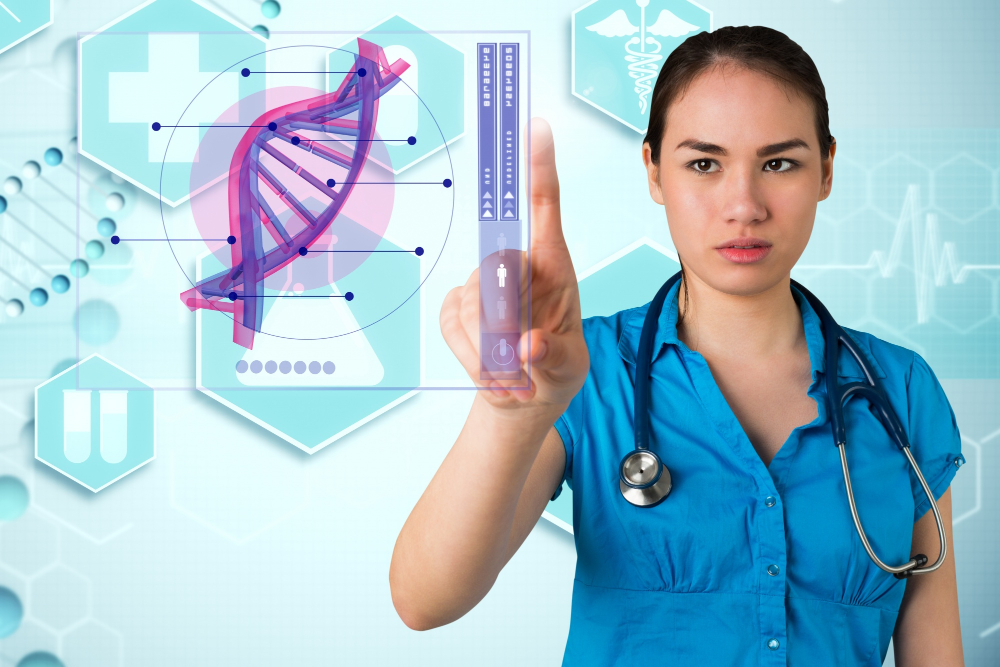
Imagine a world where your doctor prescribes treatments tailored exactly to your DNA.
No trial and error, no guessing — just precise, predictive, and personal care.
Thanks to Artificial Intelligence (AI) and genomics, that world is no longer science fiction.
Genomics — the study of an organism’s entire genetic code — reveals the blueprint of life.
AI, with its data-crunching power, turns that blueprint into actionable medical insights.
Together, they’re shaping the future of personalized medicine — healthcare built uniquely for you.
🧠 What Is Genomics, and Why Does It Matter?
Your genome contains over 3 billion DNA base pairs.
Hidden in this code are clues about:
Disease risks
Drug responses
Nutritional needs
Aging patterns
But decoding such massive data manually is nearly impossible.
That’s where AI comes in — analyzing billions of genetic data points in seconds to identify patterns that determine health outcomes.
⚙️ How AI Is Revolutionizing Genomic Research
1. DNA Sequencing and Data Analysis
Modern sequencing generates terabytes of genetic data per person.
AI algorithms automate the identification of mutations, gene variants, and biomarkers — far faster than traditional bioinformatics tools.
Example: Google DeepVariant uses deep learning to interpret genetic sequences with >99% accuracy, improving variant detection for rare diseases.
2. Disease Prediction and Risk Profiling
AI-powered models compare your genome with massive population datasets to predict disease risks early.
For example, a patient’s genome may show susceptibility to breast cancer, Alzheimer’s, or type-2 diabetes years before symptoms.
Example: IBM Watson and Tempus use AI to identify genetic markers for cancer and recommend personalized treatment options.
3. Drug Discovery and Pharmacogenomics
Every person metabolizes drugs differently based on genetic makeup.
AI helps pharmaceutical researchers match the right drugs to the right genes — minimizing side effects and improving outcomes.
Example: BenevolentAI and Deep Genomics use AI to predict how specific gene mutations affect drug response, speeding up new drug development.
4. Gene Editing and CRISPR Optimization
AI assists scientists in designing safer, more precise CRISPR edits — reducing off-target effects and improving success rates.
Example: Insilico Medicine and LabGenius use AI models to simulate genetic modifications and protein interactions before real-world trials.
5. Population Genomics and Public Health
AI-powered genomic analysis helps governments and health organizations track genetic diversity, hereditary diseases, and even pandemic response strategies.
Example: The UK’s Genomics England project uses AI to analyze 100,000+ genomes, identifying genetic risk factors across the population.
🧪 Real-World Applications: AI + Genomics in Action
Company/Project
Focus Area
AI Contribution
Tempus AI
Cancer genomics
Matches mutations to targeted therapies
Deep Genomics
RNA and genetic drug discovery
Predicts how mutations affect gene function
23andMe + AI
Consumer genomics
Uses AI to identify genetic traits and ancestry patterns
Helix
Population genomics
Provides health insights through large-scale AI data analysis
BenevolentAI
Drug discovery
Uses machine learning to identify new drug targets
Google DeepVariant
DNA sequencing
Increases variant-calling accuracy for genome analysis
🔍 Benefits of AI in Genomic Medicine
Benefit
Impact on Healthcare
Early Disease Detection
Predict risk years before symptoms appear
Personalized Treatments
Tailored therapy based on your genes
Faster Drug Discovery
AI models shorten research cycles from years to months
Reduced Side Effects
Identify genetic incompatibilities with medications
Better Preventive Care
Enable lifestyle and diet adjustments based on genetic risk
Population Health Insights
Track disease trends at a national level
⚖️ Ethical and Privacy Challenges
While the promise of AI-genomics is extraordinary, it raises crucial ethical questions:
1. Genetic Data Privacy
Your DNA is the most personal data you have. Ensuring it’s stored securely and used ethically is vital.
2. Algorithmic Bias
If AI models are trained on limited datasets, they may fail to represent diverse populations — leading to unequal health outcomes.
3. Informed Consent
Patients must understand how their genetic data is used in AI research or clinical decisions.
4. Regulation
Governments must define clear guidelines on genetic data sharing, cross-border data use, and AI model transparency.
🧭 The Future: AI-Powered Precision Medicine
AI and genomics will drive the shift from treating disease to preventing it.
In the next decade, you can expect:
AI assistants that interpret your DNA and suggest lifestyle adjustments
Predictive health apps offering risk scores based on your genome
Doctors prescribing custom therapies designed for your genetic profile
Pharmaceutical companies are already developing “n-of-1” treatments — drugs personalized for a single patient’s genetic code.
With AI as the engine and genomics as the map, medicine becomes not just reactive, but truly personalized.
🧠 Conclusion: The DNA Revolution Is Intelligent
AI and genomics together represent the most transformative leap in healthcare since the discovery of DNA itself.
They promise a world where every person receives care tailored to their unique biology — where prevention replaces reaction, and knowledge replaces uncertainty.
The future of medicine isn’t just about curing disease — it’s about predicting, preventing, and personalizing healthcare for everyone.