🧠 Introduction: The Debate That Defines the Future of Medicine
Artificial intelligence (AI) has revolutionized every industry — but few transformations have been as controversial as its impact on healthcare.
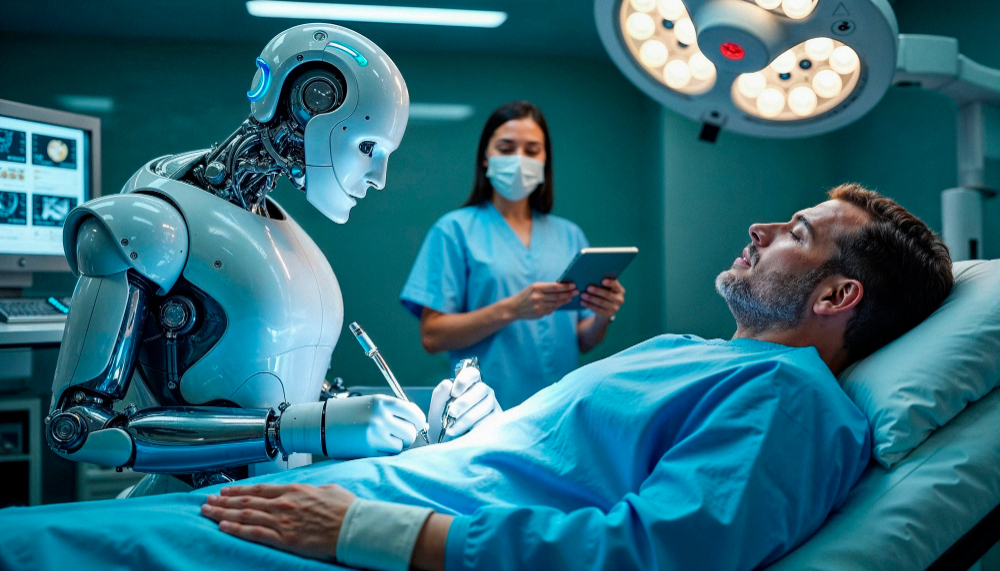
From AI diagnostic tools that detect diseases faster than specialists, to robotic surgeries that improve precision, it’s clear that machines are taking on roles once reserved for doctors.
But a critical question remains: Can AI truly replace human doctors?
Let’s dive into what AI can (and can’t) do — and why the human factor still matters more than ever.
⚙️ How AI Is Changing Modern Medicine
AI in healthcare uses machine learning, neural networks, and natural language processing to analyze data, predict outcomes, and assist clinical decisions.
Here are key areas where AI is already outperforming traditional methods:
1. Diagnostics
AI algorithms can detect diseases like cancer, diabetes, and heart disease earlier and more accurately than humans in some cases.
Google’s DeepMind AI can identify eye diseases with 94% accuracy.
IBM Watson has analyzed oncology data from millions of records in seconds.
2. Radiology & Imaging
AI systems like Aidoc and Zebra Medical Vision interpret X-rays, CT scans, and MRIs faster than radiologists — spotting minute anomalies humans might miss.
3. Personalized Treatment
AI analyzes genetic data and patient history to suggest tailored treatment plans — leading to more precise medicine and fewer side effects.
4. Virtual Health Assistants
AI chatbots (like Babylon Health or Ada Health) provide 24/7 medical advice, triaging symptoms and recommending when to seek care.
🩺 Where Human Doctors Still Have the Edge
Despite AI’s accuracy and speed, medicine isn’t just about data — it’s about people.
Here’s where humans remain irreplaceable:
1. Emotional Intelligence
AI can detect emotion through voice or facial recognition, but it can’t empathize.
Doctors comfort patients, understand fear, and make judgment calls in emotionally complex situations.
2. Ethical Decision-Making
In medical crises, decisions aren’t always black and white.
Doctors weigh ethics, values, and context — something no algorithm can replicate.
3. Complex Diagnoses
When symptoms overlap multiple conditions, doctors use reasoning and intuition honed from years of experience — not just statistical correlations.
4. Accountability and Trust
Patients trust humans who can explain and take responsibility for decisions.
If an AI makes a mistake — who’s accountable? The manufacturer? The hospital? The algorithm?
This ethical gray area highlights why AI must remain a tool, not a replacement.
⚖️ AI and Doctors: A Partnership, Not a Competition
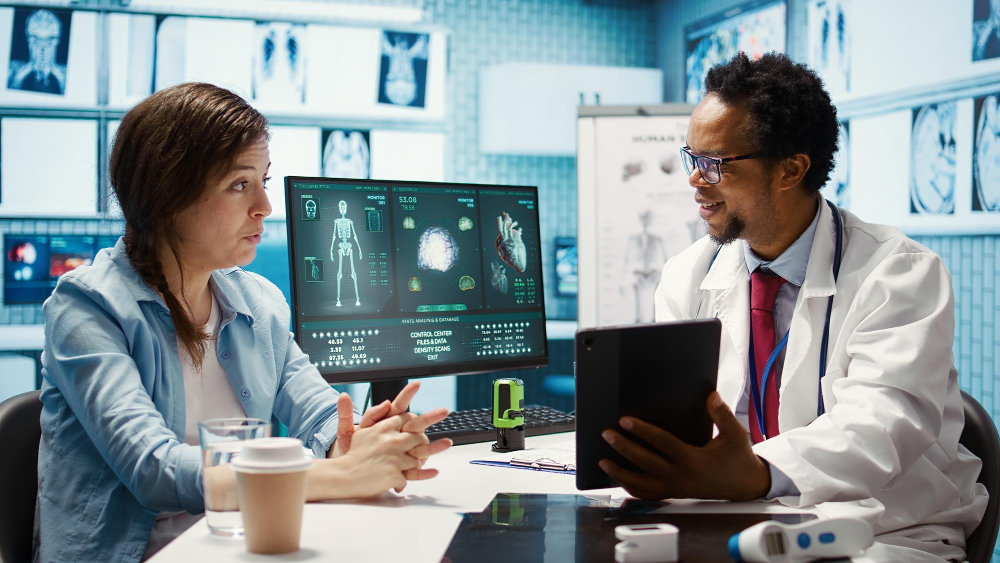
The most realistic vision for the future isn’t “AI versus doctors,” but AI with doctors — a symbiotic relationship that blends data precision with human judgment.
AI Strengths
Human Strengths
Fast, accurate data processing
Emotional understanding & empathy
24/7 availability
Ethical decision-making
Pattern recognition
Clinical intuition
Predictive analytics
Contextual awareness
Together, they can create a hybrid healthcare model — where AI handles routine tasks while doctors focus on complex cases and compassionate care.
🔍 Real-World Examples of AI-Human Collaboration
Mayo Clinic uses AI to predict patient deterioration, allowing doctors to intervene early.
Johns Hopkins Hospital employs AI to reduce diagnostic errors in imaging.
UK’s NHS uses AI chatbots to reduce waiting times and triage patients effectively.
These systems don’t replace doctors — they empower them to make faster, more informed decisions.
🚧 Challenges and Limitations of AI in Medicine
While the technology is promising, several barriers prevent AI from fully taking over:
Data Bias: AI systems can reflect racial or gender biases if trained on unbalanced datasets.
Privacy Risks: Massive data storage raises concerns about patient confidentiality.
Regulatory Hurdles: Medical AI requires strict validation before clinical use.
Over-Reliance on Machines: Blind trust in AI can lead to dangerous misdiagnoses.
The solution lies in transparency, oversight, and collaboration between tech developers and healthcare professionals.
🌍 The Future: From Doctors to Digital Partners
By 2030, AI is expected to become as common in hospitals as stethoscopes once were.
Imagine this scenario:
Your AI assistant flags early signs of heart trouble from your smartwatch data.
Your doctor reviews the alert, confirms the diagnosis, and adjusts your medication instantly.
That’s not replacing doctors — it’s augmenting their intelligence.
🧩 Conclusion: The Doctor’s Role Will Evolve, Not Disappear
AI is not here to replace human doctors.
It’s here to enhance their capabilities, reduce errors, and make healthcare more accessible.
While machines can process information, only humans can offer empathy, understanding, and trust — the cornerstones of medicine.
So, rather than fearing replacement, we should embrace AI as a partner in healing — a force that helps doctors do what they do best: save lives.