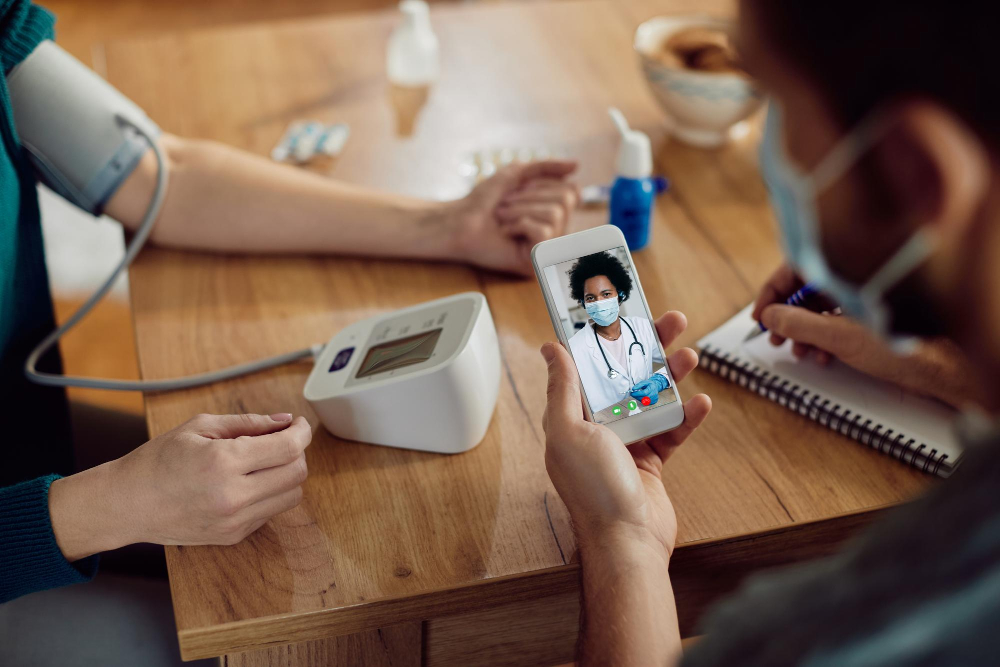
How AI-Powered Chatbots Are Changing Online Medical Consultations
Introduction: The Rise of AI in Telemedicine
Healthcare is rapidly going digital. From virtual doctors to remote monitoring, technology is making medical care more accessible, affordable, and intelligent.
At the heart of this transformation are AI-powered chatbots — virtual assistants that can listen to symptoms, answer health questions, schedule appointments, and even suggest treatments.
These digital assistants are not replacing doctors but enhancing access to care, especially in places where healthcare professionals are scarce.
In short, AI chatbots are bringing healthcare to your fingertips — literally.
What Are AI-Powered Medical Chatbots?
An AI-powered medical chatbot is a software system that uses artificial intelligence (AI) and natural language processing (NLP) to communicate with patients in real time.
These chatbots simulate a conversation with a doctor or nurse, guiding users through symptom checking, health education, and appointment scheduling.
Key Functions:
🩺 Symptom assessment and triage
🧠 Personalized health advice
💬 Mental health support
🗓️ Appointment booking and reminders
📊 Collecting patient data for clinicians
With integrations into telemedicine platforms, these bots act as the first line of contact before connecting patients to a human doctor.
How AI Chatbots Are Transforming Online Consultations
1. Instant Symptom Checking
Instead of waiting days for an appointment, patients can input symptoms and receive instant preliminary assessments.
AI compares this data to millions of cases to provide possible causes or next steps — such as “consult a specialist” or “rest and monitor symptoms.”
2. 24/7 Accessibility
AI doesn’t sleep. Medical chatbots operate round the clock, offering guidance anytime, anywhere — critical for emergencies or late-night health concerns.
3. Reduced Workload for Doctors
Chatbots handle routine queries, freeing doctors to focus on complex cases.
Hospitals using chatbots report up to 40% fewer administrative calls and faster patient triage.
4. Affordable Healthcare Access
For patients in remote or underserved regions, chatbots deliver free or low-cost consultations, bridging the healthcare gap between urban and rural areas.
5. Personalized Care Through Data
AI bots can remember user history, habits, and preferences, allowing personalized advice over time — something traditional call centers can’t achieve.
Top AI Chatbots Transforming Online Medical Consultations
1. Ada Health
A symptom-assessment app powered by AI, used by over 13 million people worldwide. It provides personalized health insights and helps users decide when to see a doctor.
2. Babylon Health
This UK-based app combines AI triage with live video consultations. Its chatbot asks questions about symptoms before connecting users to human doctors.
3. Buoy Health
Developed by Harvard Medical experts, Buoy uses NLP to guide users through an interactive symptom-checker that mimics a real doctor conversation.
4. Woebot
An AI chatbot focused on mental health support, providing cognitive behavioral therapy (CBT) through chat for anxiety and depression.
5. HealthTap
An AI-driven platform that connects patients to licensed doctors, but first screens symptoms via a chatbot for faster diagnosis and triage.
Benefits for Patients and Providers
Benefits for Patients
Benefits for Doctors & Hospitals
24/7 instant healthcare access
Reduced administrative burden
Personalized health guidance
Better patient data collection
Lower consultation costs
Automated appointment scheduling
Quick triage for emergencies
Improved patient satisfaction
These advantages are especially impactful in developing countries like Pakistan, India, and Nigeria, where doctor-to-patient ratios are low and telemedicine is growing rapidly.
AI Chatbots in Action: Real-World Examples
During the COVID-19 pandemic, WHO launched an AI chatbot on WhatsApp to answer health questions and spread verified information — reaching millions in multiple languages.
In India, Apollo Hospitals introduced an AI chatbot to handle 500,000+ patient queries per month.
In Pakistan, startups are experimenting with Urdu/English bilingual medical bots to reach rural populations.
Limitations and Ethical Concerns
While AI chatbots offer incredible benefits, challenges remain:
⚠️ Accuracy: AI may misinterpret symptoms or overlook complex cases.
🔐 Privacy: Patient data must be securely stored and encrypted.
🤖 Bias: Algorithms trained on limited datasets can misdiagnose underrepresented groups.
🧑⚕️ Human Touch: Empathy and emotional understanding are still unique to human doctors.
Experts recommend using chatbots as support tools, not replacements for licensed professionals.
The Future: Smarter, More Human-Like Chatbots
AI chatbots are evolving fast. Next-generation systems will use multimodal AI — understanding voice, video, and even biometric data.
Upcoming features include:
Voice-based consultations with emotional tone detection
Integration with wearable devices for live health tracking
AI that can summarise medical records for doctors automatically
In the near future, your health assistant might know you better than your family doctor.
Conclusion: Chatbots as the New Frontline of Digital Health
AI-powered chatbots are transforming online medical consultations from a text-based novelty to a reliable, data-driven healthcare service.
They provide instant support, bridge gaps in healthcare accessibility, and empower both patients and doctors.
However, true progress lies in human-AI collaboration — where chatbots handle routine care, and doctors bring compassion, expertise, and judgment to every patient interaction.
In the coming decade, AI medical chatbots won’t replace doctors — they’ll help every doctor be faster, smarter, and more connected to their patients.