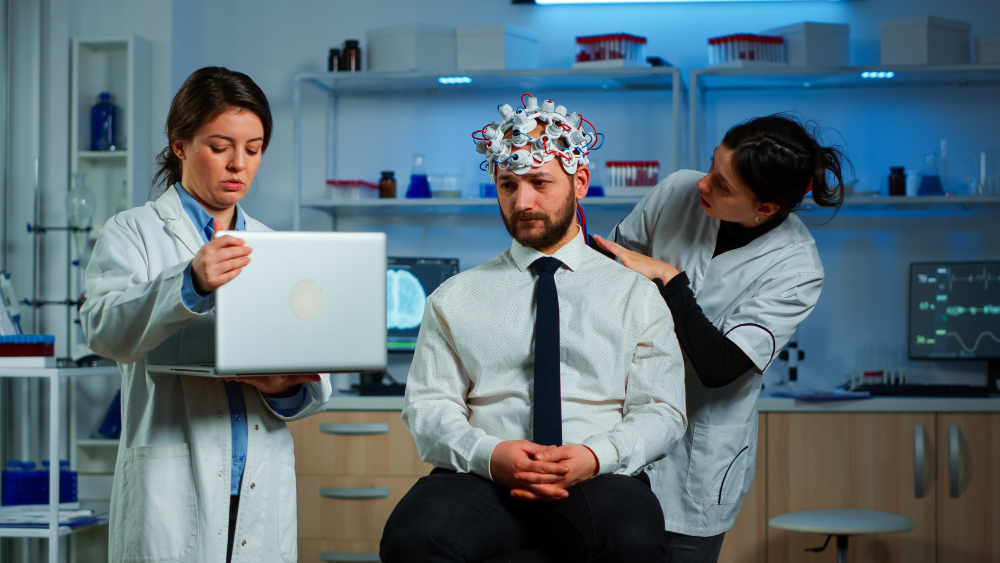
Mental health has become one of the defining challenges of our time. Depression, anxiety, and stress affect billions globally — and traditional therapy, while effective, often struggles with accessibility, cost, and stigma.
Now, artificial intelligence (AI) is stepping in to bridge the gap. From AI-powered chatbots that listen 24/7 to apps that predict emotional breakdowns before they happen, technology is transforming how we understand and care for the mind.
But can machines really help us heal emotionally?
🤖 How AI Is Being Used in Mental Health Today
1. AI-Powered Therapy Chatbots
Apps like Woebot, Wysa, and Replika use AI to simulate conversations with empathy.
They rely on Natural Language Processing (NLP) to understand user input, offer coping techniques, and track mood changes over time.
💬 Example:
Woebot uses Cognitive Behavioral Therapy (CBT) principles to guide users through anxiety or negative thought patterns.
Why it matters:
Available 24/7 — no appointments or waiting rooms.
Provides emotional support to those who can’t access therapy easily.
Helps normalize daily mental-health check-ins.
2. Mood Tracking and Emotional Analytics
AI-based apps now use phone sensors and wearable data to track indicators like:
Sleep quality
Speech tone
Typing rhythm
Heart rate variability
By analyzing these metrics, AI can identify early signs of depression, stress, or burnout.
📱 Example:Mindstrong analyzes smartphone usage patterns to detect cognitive changes related to mental illness — offering early intervention alerts to users or clinicians.
3. Personalized Mental Wellness Plans
AI doesn’t just react — it learns.
It analyzes your data over time and tailors recommendations for meditation, diet, journaling, or exercise to support emotional balance.
🧘 Example:
Apps like Youper and Headspace AI provide personalized meditation sessions and check-ins based on mood trends.
4. Predictive Mental Health Models
Hospitals and clinics use predictive analytics to identify patients at risk of suicide, relapse, or severe depression before crisis points occur.
🩺 Example:
Researchers at Stanford University trained AI models to analyze voice patterns — accurately predicting post-traumatic stress disorder (PTSD) risk in veterans.
💡 The Benefits of AI in Mental Healthcare
Benefit
How It Helps
Accessibility
24/7 support anywhere in the world
Affordability
Lower cost than traditional therapy
Early Intervention
Detects problems before they escalate
Personalization
Adapts to your unique emotional data
Reduced Stigma
Private, judgment-free environment
AI democratizes mental health support — especially in regions where therapists are scarce or expensive.
⚖️ The Limitations — and the Human Touch We Can’t Replace
Despite progress, AI cannot fully understand the depth of human emotion.
1. Lack of Genuine Empathy
AI can simulate empathy, not feel it.
Emotional understanding in therapy requires shared humanity — tone, body language, compassion — that machines can only mimic.
2. Privacy & Data Risks
Mental health data is among the most sensitive information a person can share.
Without strict data protection, there’s a risk of misuse or breaches.
3. Risk of Misdiagnosis
AI is only as good as the data it’s trained on.
If the data is biased or incomplete, predictions about a user’s mental state can be wrong — sometimes dangerously so.
4. Over-Reliance on Technology
While AI is a powerful companion, it can’t replace professional judgment or human connection.
Experts warn against treating chatbots as a substitute for therapy, rather than a complement to it.
🧠 AI and Human Therapists: A Powerful Partnership
The most effective path forward is collaboration, not competition.
Imagine a system where:
AI tracks daily emotional data and flags mood dips early.
Human therapists use those insights to tailor sessions and treatment plans.
This hybrid approach allows for both precision and compassion — the data-driven intelligence of machines and the empathy of humans.
🌍 Global Impact: Making Mental Health Support Universal
In countries with limited mental-health resources, AI apps have become a lifeline.
In India and Pakistan, AI chatbots like Wysa provide free therapy tools to millions.
The UK’s NHS uses AI triage systems to connect patients with appropriate mental-health professionals faster.
In the U.S., major employers use AI wellness programs to track and support workforce mental health proactively.
AI isn’t just helping individuals — it’s reshaping entire public-health systems.
🔮 The Future: Emotionally Intelligent AI
By 2030, researchers expect to see emotionally adaptive AI — systems that recognize tone, facial expressions, and even physiological changes to offer more empathetic responses.
This technology could help create:
Virtual therapists capable of detecting mood shifts in real time
AI wellness companions integrated into wearable devices
Personalized digital twins that simulate your emotional and physical health
While we’re not there yet, these innovations hold incredible promise for continuous emotional care.
💬 Conclusion: Healing with Humanity and Technology
AI is transforming mental health care by making support more accessible, personalized, and proactive.
But technology alone can’t heal the human mind — that requires understanding, trust, and empathy.
The real magic happens when AI and humans work together — data guiding compassion, and compassion guiding data.
Because the future of mental health isn’t about choosing between humans and machines —
it’s about teaching technology to help us be more human.