Introduction: The Future of Medical Diagnosis is Here
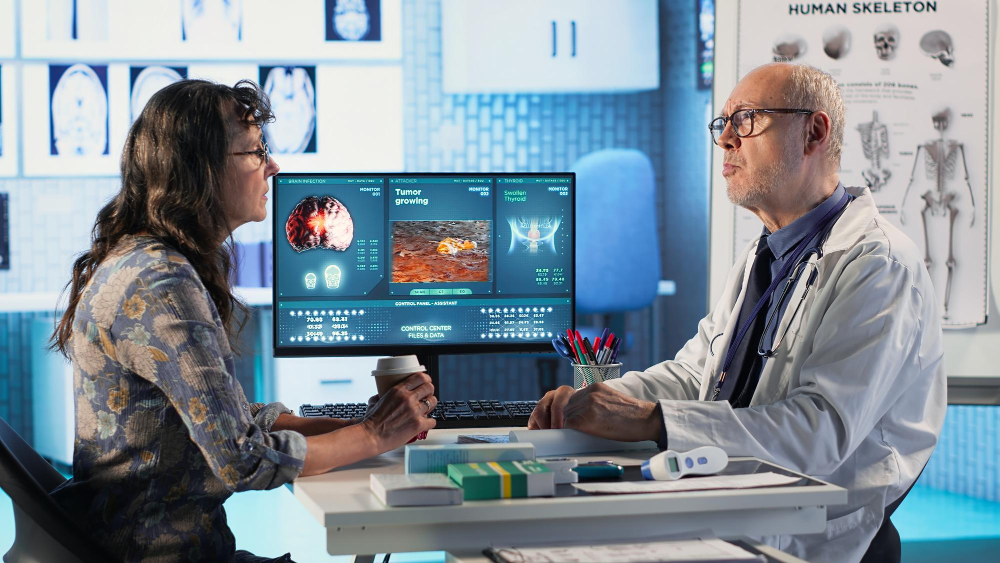
For decades, early and accurate disease diagnosis has been the biggest challenge in healthcare. Doctors rely on years of training and experience — but even experts can miss subtle signs hidden in complex data like X-rays, MRIs, or lab results.
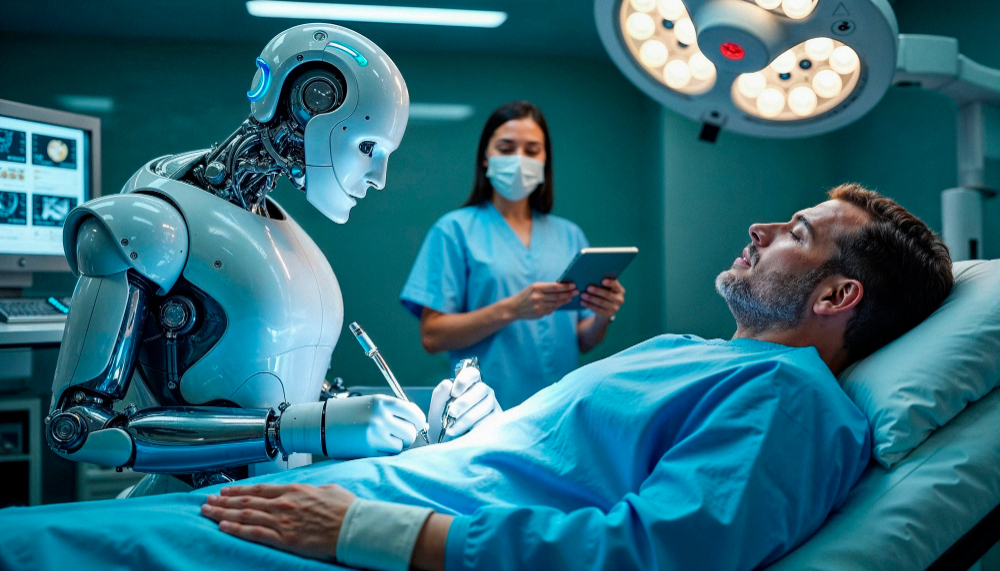
Enter Artificial Intelligence (AI) — the digital revolution that’s now outperforming humans in specific diagnostic tasks. AI systems are scanning millions of medical images, detecting tiny abnormalities, and predicting diseases long before symptoms appear.
In short, machines are helping doctors see what the human eye cannot.
How AI Diagnoses Diseases Faster
AI doesn’t get tired, distracted, or biased. Using machine learning (ML) and deep learning algorithms, it can analyse thousands of images in seconds — learning to identify patterns linked with cancer, heart disease, diabetes, and more.
Here’s how it works:
Data Input: The AI model is trained on massive datasets (X-rays, CT scans, lab tests, EHRs).
Pattern Recognition: It identifies patterns linked with diseases (e.g., a tumor shape or texture).
Prediction: The system compares new patient data against its learned patterns.
Output: The AI provides a diagnostic probability — often with higher accuracy and speed than humans.
According to The Lancet Digital Health (2023), AI diagnostic tools can detect certain cancers up to 20% faster and with higher precision than traditional radiology methods.
Top AI Tools Leading the Diagnostic Revolution
1. Google DeepMind Health
DeepMind’s AI can analyse retinal scans to detect over 50 eye diseases, including diabetic retinopathy and macular degeneration — at a speed faster than ophthalmologists.
2. IBM Watson Health
IBM’s Watson uses natural language processing and ML to analyse patient data, providing personalised treatment recommendations based on global medical research.
3. PathAI
This platform uses AI to assist pathologists in identifying cancerous cells in tissue samples, improving both accuracy and efficiency in pathology labs.
4. Aidoc
Aidoc provides AI-powered radiology assistance, alerting radiologists about critical findings such as internal bleeding or stroke within minutes.
5. Zebra Medical Vision
Zebra’s AI analyses medical imaging for signs of conditions like osteoporosis, lung disease, and heart abnormalities — often detecting them before symptoms appear.
Real-World Impact: AI in Action
Cancer Detection: AI models can now detect breast cancer from mammograms with over 90% accuracy, sometimes outperforming radiologists.
Cardiology: AI ECG tools predict heart failure risk months in advance.
COVID-19: During the pandemic, AI helped classify chest X-rays and CT scans in seconds, speeding up triage and diagnosis.
These technologies don’t replace doctors — they enhance their capabilities. With AI handling data-heavy analysis, physicians can focus more on patient interaction and treatment planning.
Why AI Outperforms Human Diagnostics
Feature
Human Doctors
AI Diagnostic Systems
Speed
Minutes to hours
Seconds
Data Volume
Limited per case
Millions of samples
Fatigue
Affected by workload
None
Pattern Detection
Based on experience
Based on big data
Accuracy
~85–90%
Up to 95%+ (task-dependent)
AI brings consistency, scalability, and predictive accuracy — especially valuable in overburdened healthcare systems like Pakistan, India, and developing regions.
Challenges and Ethical Considerations
Despite its promise, AI in diagnostics comes with challenges:
Data privacy — protecting patient information is vital.
Bias in algorithms — AI trained on Western data may misclassify diseases in other populations.
Regulation and accountability — who’s responsible if AI misdiagnoses?
Integration issues — hospitals need compatible digital infrastructure.
Healthcare experts agree: AI must be used with human oversight, not as a standalone decision-maker.
The Future: Human + AI = Smarter Medicine
The most successful healthcare systems will combine the intuition and empathy of doctors with the speed and precision of AI.
Imagine a world where:
A smartwatch detects heart irregularities before a stroke.
AI scans a chest X-ray and alerts a doctor instantly.
Hospitals cut diagnostic errors by half.
That future is already here — and growing every day.
Conclusion
AI in diagnostics isn’t replacing doctors — it’s empowering them. With faster disease detection, more accurate results, and lower costs, AI is saving lives and transforming the way healthcare works.
As technology advances, the question is no longer if machines can diagnose faster than doctors — it’s how soon every hospital will use them.