Radiology has always been the eyes of modern medicine — revealing what the naked eye cannot see.
Now, Artificial Intelligence (AI) is making those eyes sharper, faster, and smarter.
From detecting cancers at microscopic stages to automating routine scans, AI is transforming how radiologists diagnose and treat patients.
What once took hours can now take minutes — with improved accuracy and confidence.
Welcome to AI-powered radiology, where every image tells a clearer story.
🧬 What Is AI in Radiology?
AI in radiology uses machine learning and deep learning algorithms to analyze medical images such as:
X-rays
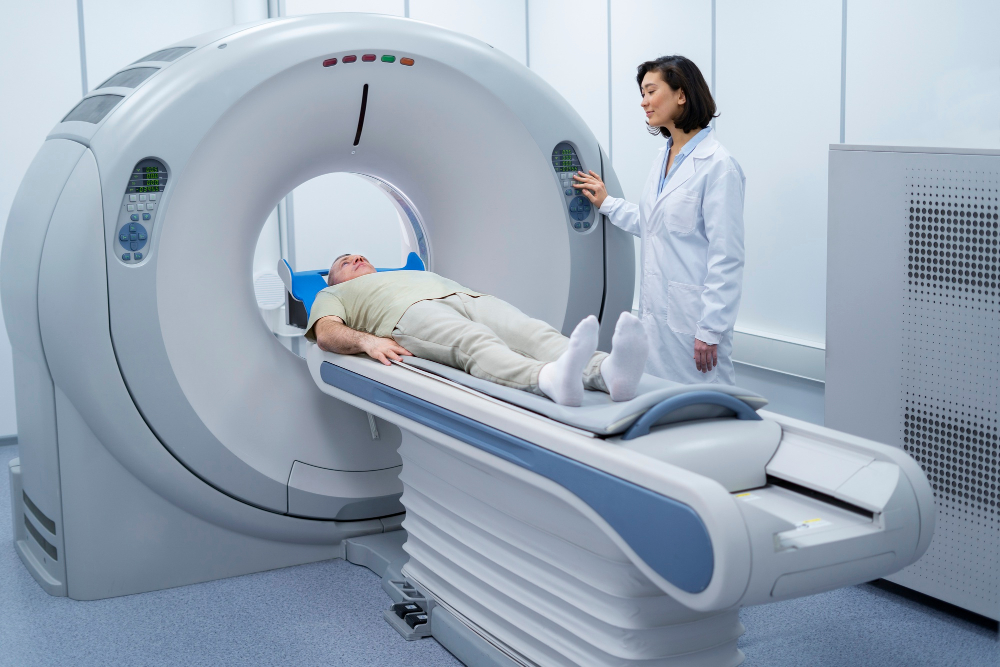
CT scans
MRIs
Ultrasounds
Mammograms
PET scans
These AI systems can identify abnormalities — tumors, fractures, lesions, or infections — with incredible precision, often matching or even surpassing human-level performance in specific diagnostic tasks.
⚙️ How AI Works in Medical Imaging
1. Data Training and Pattern Recognition
AI algorithms are trained on millions of annotated medical images.
They learn to recognize subtle patterns associated with diseases — such as lung nodules, brain hemorrhages, or bone fractures.
2. Real-Time Image Analysis
Once trained, AI can process new images instantly, highlighting suspicious areas for the radiologist’s review.
3. Workflow Automation
AI assists in scheduling, image sorting, and prioritization — ensuring urgent cases are flagged first.
4. Continuous Learning
With every scan analyzed, AI models learn and improve, adapting to new imaging data and diagnostic outcomes.
🔍 Top Use Cases of AI in Radiology (2025)
1. Cancer Detection and Screening
AI tools like Google’s LYNA (Lymph Node Assistant) detect breast cancer metastases with accuracy rates above 90%.
Similarly, IBM Watson Health and Tempus analyze MRI and pathology data to predict cancer progression.
✅ Impact: Early detection → higher survival rates and more effective treatment planning.
2. Brain and Neurological Imaging
AI models like Aidoc and Viz.ai identify stroke, hemorrhage, and brain tumors in seconds, alerting doctors in real time.
This can reduce critical diagnosis delays that often determine life or death outcomes.
✅ Impact: Faster stroke detection → timely treatment → reduced long-term disability.
3. Chest and Lung Imaging
AI systems detect pneumonia, tuberculosis, and COVID-19-related lung abnormalities from X-rays and CT scans faster than manual review.
Qure.ai, for instance, is used in over 70 countries for lung screening and TB detection in underdeveloped areas.
✅ Impact: Rapid diagnosis in resource-limited settings → lives saved through early intervention.
4. Orthopedic and Musculoskeletal Imaging
AI-powered image recognition helps radiologists spot fractures, joint misalignments, and degenerative diseases instantly.
Tools like Arterys and Zebra Medical Vision streamline orthopedic imaging workflows.
✅ Impact: Reduced diagnostic backlog and quicker patient discharge.
5. Cardiac Imaging
AI-driven platforms analyze echocardiograms and cardiac MRIs to measure heart function and detect anomalies.
HeartFlow, for example, uses AI to simulate blood flow through coronary arteries, helping doctors diagnose blockages non-invasively.
✅ Impact: Safer, faster heart disease diagnosis — without surgery.
🏥 Real-World Examples of AI in Radiology
AI Tool
Company/Developer
Primary Use
Impact
Aidoc
Aidoc
CT/MRI triage for stroke, bleed, embolism
Reduced reporting time by 32%
Zebra Medical Vision
Zebra AI
Multi-organ disease detection
Early warning system for chronic diseases
Qure.ai
Qure.ai
Chest X-ray and head CT analysis
Deployed in 70+ countries
Viz.ai
Viz.ai
Stroke detection
Reduces time to treatment by 40%
Arterys
Arterys Inc.
Cardiac & lung imaging
Cloud-based collaboration and diagnostics
These systems are helping radiologists move from interpretation to insight, freeing time for complex cases that require human expertise.
💡 Benefits of AI in Radiology
Advantage
What It Means for Healthcare
Speed
AI can analyze images 10x faster than manual review
Accuracy
Detects patterns invisible to the human eye
Consistency
Eliminates fatigue-related errors
Efficiency
Automates repetitive reporting and image sorting
Accessibility
Enables remote diagnostics for rural hospitals
Cost Savings
Shorter turnaround → reduced hospital stays
⚖️ Challenges and Ethical Considerations
While AI is revolutionizing radiology, challenges remain:
1. Data Privacy
Medical images contain personal data that must be securely stored and processed.
Ensuring compliance with privacy laws (HIPAA, GDPR) is crucial.
2. Bias and Data Quality
If training data is biased or incomplete, AI may produce inaccurate or unfair results — especially for underrepresented populations.
3. Regulatory Approval
Each AI tool requires rigorous validation and certification before use in hospitals (FDA, CE Mark, etc.).
4. Human Oversight
AI is an assistant, not a replacement. Final decisions must always rest with qualified radiologists.
🌍 Global Adoption and Market Growth
The global AI in medical imaging market is projected to reach $12 billion by 2030, growing at over 35% annually.
Regions leading adoption include:
North America – rapid FDA approvals for diagnostic AI tools
Europe – heavy investment in smart imaging research
Asia-Pacific – growing use in rural diagnostics and telemedicine
Hospitals are now investing in AI-integrated PACS (Picture Archiving and Communication Systems) for seamless data management and smart triage.
🔮 The Future of AI Radiology
By 2030, expect to see:
Fully autonomous image pre-reads before human verification
AI-powered diagnostic dashboards combining imaging, genomics, and lab data
Voice-assisted reporting using NLP (Natural Language Processing)
Cross-specialty AI collaboration — radiology, pathology, and genomics linked for precision medicine
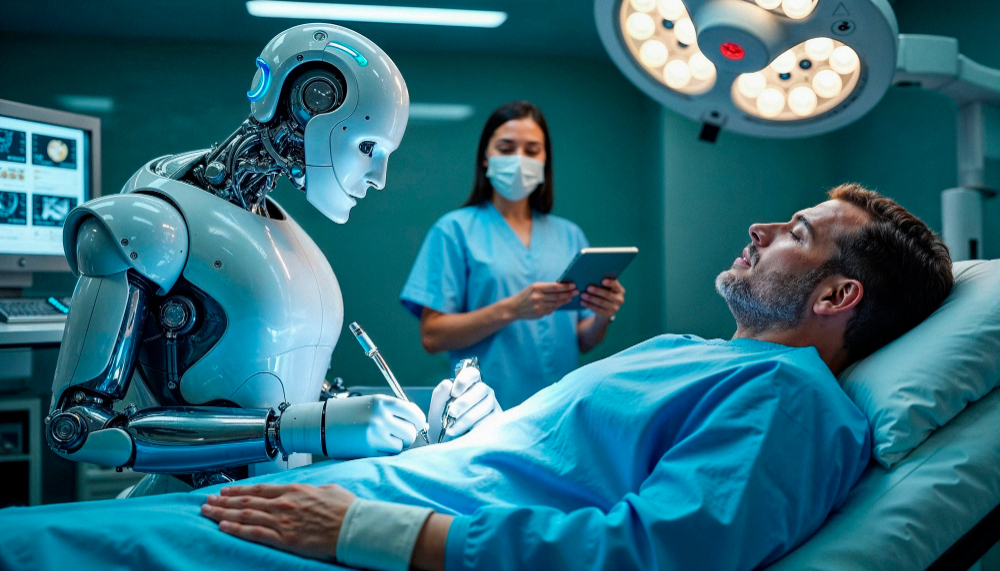
AI will not replace radiologists — it will make them faster, smarter, and more accurate.
💬 Conclusion: The New Partnership Between Man and Machine
AI in radiology is not just a technological upgrade — it’s a transformation of how we detect and treat disease.
With faster imaging, earlier diagnosis, and fewer errors, AI empowers radiologists to do what they do best: heal with precision and confidence.
The future of medical imaging lies in this partnership — where human expertise meets machine intelligence, creating a world where diagnosis is faster, safer, and smarter than ever before.